

16th May 2026
Anniversary of the Great Proletarian Cultural Revolution
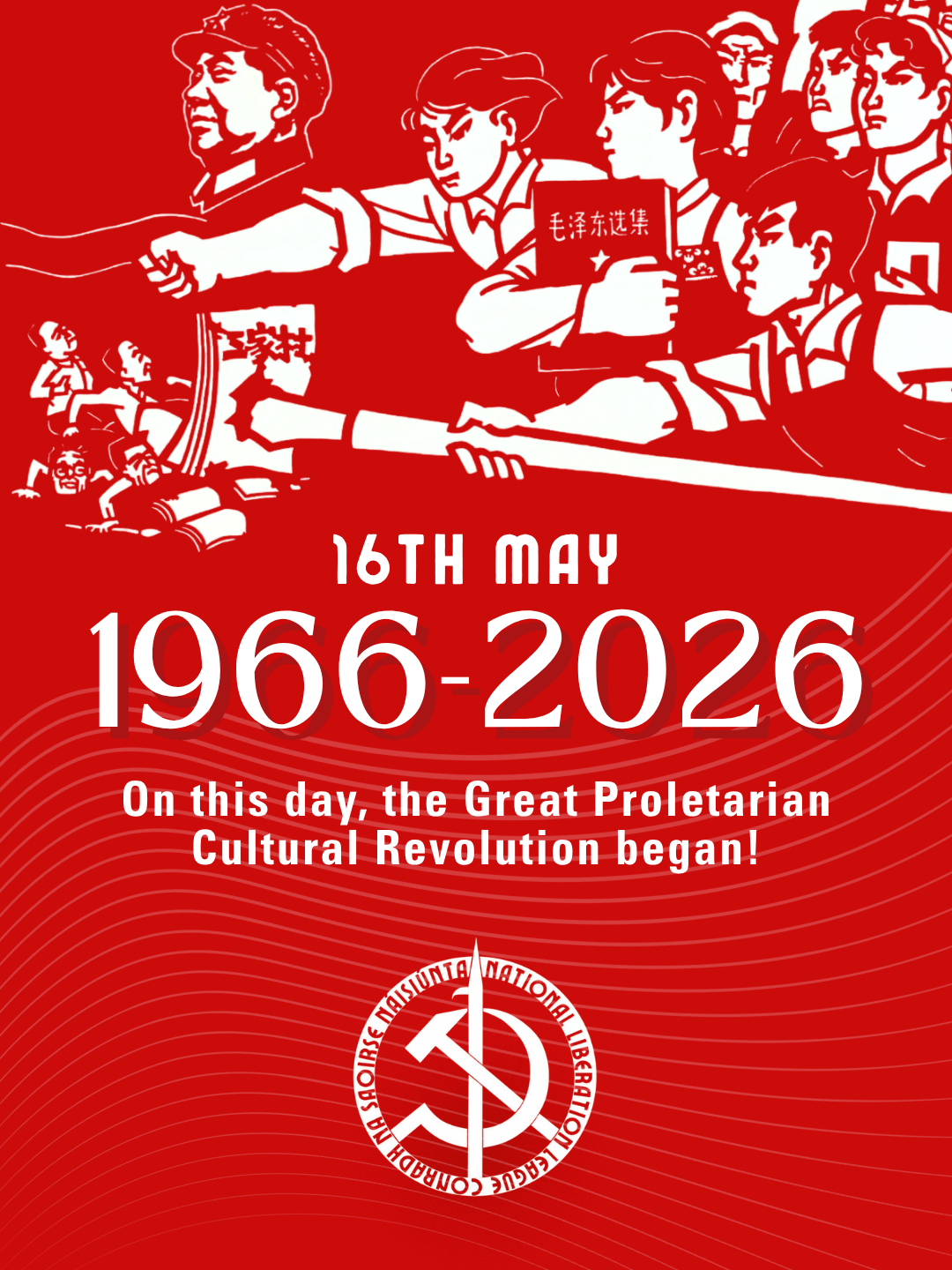
On this day in 1966, the Central Committee of the Communist Party of China (CPC) published the 16th of May Notification, declaring the beginning of the Great Proletarian Cultural Revolution.
This declaration condemned the capitalist-roaders who had seized control over the party and state apparatus, waving the red flag in order to oppose the red flag, as had happened prior in the Soviet Union.
The Revisionist Trend
At this point, revisionism had been consuming the socialist world, with the revision of Marxism-Leninism by Nikita Khruschev, who enabled the bourgeoisie to take the reigns of state power in the USSR, launching attacks on the legacy of Stalin, collectivised agriculture and the socialist planning system internally while propagating a so-called "parliamentary road to socialism" abroad. Opportunist trends such as these became very prevalent after the Sino-Soviet split, where Soviet allies would revise their party programmes to be inline with the now social-imperialist Soviet Union, including parties in Ireland.
From the Masses, to the Masses
Mao's recognition that class struggle does not end under socialism, but on the contrary, intensifies, saw it necessary that to avoid the errors of the former socialist states, the Party must mobilise the masses in opposition to the capitalist-roaders, foremost among them Liu Shaoqi and Deng Xiaoping.
This had been done first with the organisation of the schools and universities, who could set up their own organisations and air criticisms of the party and their local administrations, similar to the Hundred Flowers campaign of 1956. In August, Chairman Mao Zedong addressed a million Red Guards in solidarity. Later, programs were established to support the mass movement with food and lodging, drawing in millions more to rallies.
As students came under attack from the Rightist clique in the CPC, in July Mao called for the Red Guards to "bombard the headquarters" and attack the command centres of the revisionists. By 1967, the masses seized power from the capitalist-roaders through the establishment of revolutionary committees across the country, overthrowing local party and state institutions and restoring the proletarian line to power.
The Red Guards were made up of the revolutionary youth who sought to eliminate the old order of feudal subjugation, religious oppression and patriarchy. The Four Olds of old customs, old culture, old habits and old ideas were confronted as the cultural basis for Right-opportunism amongst the party and masses.
Relations of production within industrial enterprises were revolutionised, while radical reforms significantly improved the state of healthcare and education. The cultural revolution sought to eradicate the birthmarks of the old society that served as sources of capitalist restoration and train the masses to take their place in the management of production and rule of society.
Against Revisionism Today
The capitalist-roaders reclaimed power in a counterrevolutionary coup in 1976 and have since fully restored capitalist relations of production throughout China. It is the duty of all communists today to follow the example of Lenin, Stalin and Mao in opposing opportunism of all kinds.
Today, we remember the Great Proletarian Cultural Revolution and the millions of Chinese workers, peasants and students who devoted their lives for the cause of communism.